16. April 2026
Deck Resurfacing in Raleigh North Carolina: A Complete Guide to Restoring Your Outdoor Space
Introduction
Your deck is one of the most-used outdoor spaces in your home—a place for family gatherings, summer barbecues, and quiet mornings with coffee. But over time, exposure to North Carolina's humidity, UV rays, and seasonal weather can take a toll. Faded boards, soft spots, and structural issues don't necessarily mean you need a complete replacement. Deck resurfacing is a cost-effective solution that can breathe new life into your outdoor living space while saving you 30–50% compared to full deck replacement.
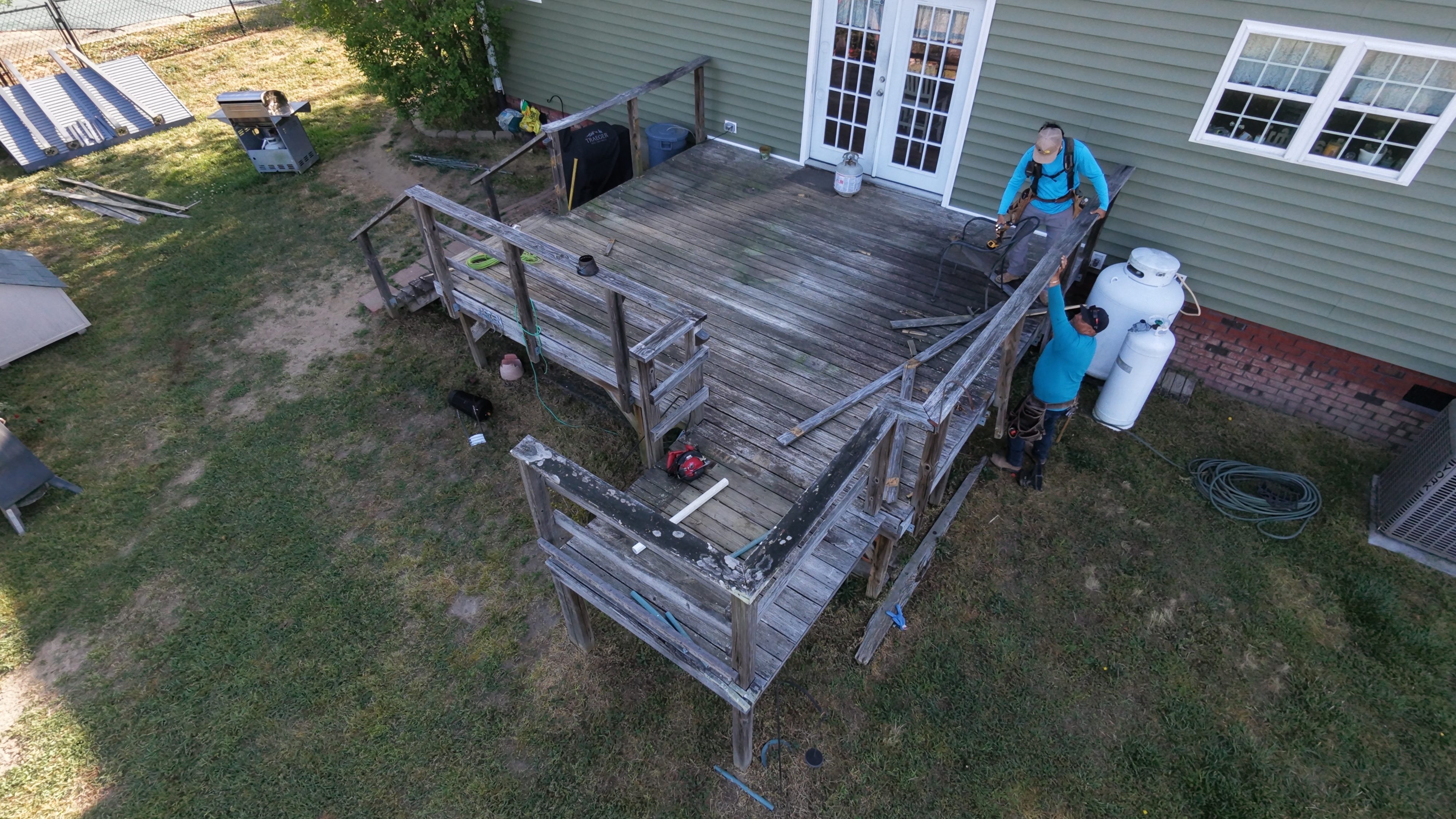
In this guide, we'll walk you through everything you need to know about deck resurfacing in North Carolina—from understanding the process and costs to knowing when it's the right choice for your home. Whether you're in Raleigh, Angier, Durham, or anywhere across the Triangle, this comprehensive resource will help you make an informed decision.
What Is Deck Resurfacing?
Deck resurfacing is the process of replacing the visible decking boards and surface components while keeping the underlying structure (joists, beams, and support posts) intact. Think of it as giving your deck a complete cosmetic and functional refresh without the expense and disruption of tearing everything down and starting over.
Key Components of Deck Resurfacing:
- Decking boards – The surface you walk on
- Handrails and balusters – Safety and aesthetic upgrades
- Fasteners and hardware – New nails, screws, and brackets
- Sealant or stain – Protective finish for longevity
The substructure (the "bones" of your deck) remains in place, which is why resurfacing is significantly faster and more affordable than replacement.
Deck Resurfacing vs. Deck Replacement: Which Is Right for You?
Before deciding on resurfacing, it's important to understand how it compares to full replacement. Here's what you need to know:
Cost Comparison
FactorDeck ResurfacingFull Deck ReplacementCost per sq ft$15–$50$35–$65Average 300 sq ft deck$4,500–$15,000$10,500–$19,500Savings30–50% upfrontHigher long-term durabilityTimeline2–5 days2–3 weeksDisruptionMinimalSignificant (machinery, debris)
When to Choose Resurfacing
Resurfacing is the ideal choice if:
- Your deck's substructure is sound (no rot, termite damage, or sagging)
- The frame is less than 20 years old
- You want a quick, budget-friendly refresh
- You're looking to update the appearance without major structural work
- Repairs would cost less than 25% of replacement
When to Choose Replacement
Full replacement is necessary if:
- Your substructure shows signs of rot or decay
- The deck is sagging or unstable
- Termite damage is present
- The deck is over 20 years old with multiple structural issues
- You want maximum long-term durability and low maintenance
- You're planning to increase home resale value significantly
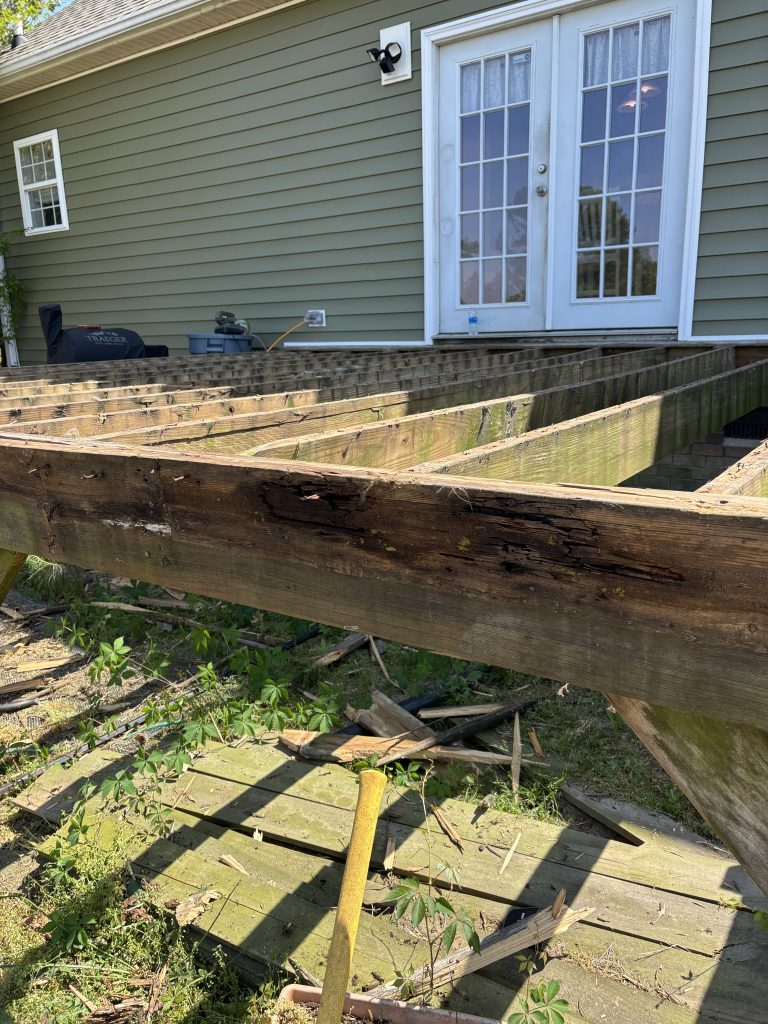
The Deck Resurfacing Process: Step-by-Step
Understanding what goes into a professional deck resurfacing project helps you appreciate the craftsmanship involved. Here's how Home Solutions NC approaches every resurfacing job:
Step 1: Structural Inspection
Before any work begins, a thorough inspection of the substructure is essential. This includes:
- Checking for rot in joists and beams
- Testing for termite damage
- Assessing deck sag and stability
- Evaluating post and foundation integrity
If issues are found, they're addressed before resurfacing begins. This ensures your new deck surface sits on a safe, stable foundation.
Step 2: Preparation and Demolition
Once the structure is approved, the old decking is carefully removed:
- Remove old boards and fasteners
- Clean the substructure of debris
- Inspect and repair any minor issues in the frame
- Prepare the surface for new installation
Step 3: Structural Support Upgrades
This is where modern resurfacing projects often exceed expectations. Many homeowners take the opportunity to:
- Replace band boards (the rim boards around the deck perimeter)
- Add or reinforce support beams with concrete footings
- Upgrade ledger boards where the deck connects to the house
- Install new flashing to prevent water damage
These upgrades ensure your resurfaced deck will last for decades.
Step 4: Install New Decking
The new decking material is installed with precision:
- Lay treated or composite boards with proper spacing for expansion
- Install boards with grain rings facing down to prevent rot and cupping
- Use corrosion-resistant fasteners (stainless steel or coated screws)
- Ensure proper slope for water drainage
Pro Tip: Always check the end grains of decking boards and install them with the rings facing down. This simple step significantly reduces the risk of future rot and warping.
Step 5: Install Handrails and Balusters
Safety and aesthetics go hand-in-hand:
- Install new handrails meeting local building codes
- Add aluminum or composite balusters for a modern look
- Ensure proper spacing (no more than 4 inches between balusters)
- Finish with quality hardware for durability
Step 6: Finishing Touches
The final step protects your investment:
- Sand edges for smooth, safe surfaces
- Apply sealant or stain for weather protection
- Install trim and molding for a polished appearance
- Final inspection to ensure quality standards
Deck Resurfacing Costs in North Carolina
Understanding the cost breakdown helps you budget effectively for your project.
Average Pricing (2025)
- Budget resurfacing: $15–$25 per sq ft ($4,500–$7,500 for 300 sq ft)
- Mid-range resurfacing: $25–$40 per sq ft ($7,500–$12,000 for 300 sq ft)
- Premium resurfacing: $40–$50+ per sq ft ($12,000–$15,000+ for 300 sq ft)
Factors That Affect Cost
- Decking Material
- Pressure-treated lumber: $2–$5 per sq ft
- Cedar or composite: $5–$15 per sq ft
- Premium composite: $15–$25 per sq ft
- Structural Repairs
- Minor repairs: $500–$2,000
- Significant structural work: $2,000–$8,000+
- Labor Costs
- NC labor rates: $50–$100 per hour
- Complexity and timeline affect total labor
- Additional Features
- New handrails: $1,000–$3,000
- Aluminum balusters: $500–$2,000
- Built-in seating or storage: $1,000–$5,000+
- Location
- Raleigh, Durham, Chapel Hill: Higher labor costs
- Rural NC areas: Potentially lower costs
Getting Accurate Quotes
Always get 3–5 quotes from licensed contractors in your area. A detailed quote should include:
- Scope of work (materials and labor)
- Timeline and project schedule
- Warranty information
- Payment terms and schedule
- Cleanup and debris removal
Choosing the Right Decking Material
The material you choose impacts durability, maintenance, and aesthetics.
Pressure-Treated Lumber
Pros:
- Most affordable option
- Readily available
- Familiar, traditional look
Cons:
- Requires regular staining/sealing (every 2–3 years)
- Susceptible to rot and termites in NC's humid climate
- Splinters over time
- Lifespan: 10–15 years
Cedar or Redwood
Pros:
- Beautiful natural appearance
- Naturally resistant to rot
- Warm, attractive color
Cons:
- More expensive than pressure-treated
- Still requires regular maintenance
- Can fade and gray over time
- Lifespan: 15–20 years
Composite Decking
Pros:
- Low maintenance (no staining/sealing)
- Highly durable (25–50 year lifespan)
- Resistant to rot, termites, and fading
- Eco-friendly (often made from recycled materials)
- Excellent for NC's humid climate
Cons:
- Higher upfront cost ($15–$25 per sq ft)
- Can be slippery when wet
- Limited color options compared to wood
Recommendation for North Carolina: Composite decking is an excellent investment for NC homeowners. The state's humidity and UV exposure make low-maintenance composite materials a smart long-term choice.
Deck Resurfacing Timeline: What to Expect
Pre-Project Phase (1–2 weeks)
- Schedule inspection and consultation
- Receive quotes and finalize contract
- Obtain any necessary permits
Active Resurfacing (2–5 days)
- Day 1: Demolition and preparation
- Day 2: Structural repairs and new board installation
- Day 3: Handrails, balusters, and finishing work
- Day 4–5: Final touches, sealant application, cleanup
Post-Project (1–2 weeks)
- Allow sealant to cure fully
- Avoid heavy use during curing period
- Final walkthrough and inspection
Note: Weather can impact timelines. Rain delays are common in North Carolina, so plan accordingly.
Deck Maintenance After Resurfacing
Proper maintenance extends the life of your resurfaced deck significantly.
Annual Maintenance Checklist
- Spring: Clean debris, inspect for damage, apply sealant if needed
- Summer: Monitor for loose boards or fasteners
- Fall: Clear leaves and debris, check drainage
- Winter: Remove snow/ice carefully, inspect for water damage
Material-Specific Care
Pressure-Treated or Wood Decks:
- Stain or seal every 2–3 years
- Inspect for rot annually
- Replace damaged boards promptly
Composite Decks:
- Clean with mild soap and water
- Inspect fasteners annually
- No staining or sealing required
- Minimal maintenance overall
Local Considerations for North Carolina Decks
North Carolina's climate presents unique challenges for deck longevity.
Humidity and Moisture
NC's high humidity accelerates wood decay and promotes mold growth. This makes:
- Proper drainage essential (slope decking slightly for water runoff)
- Composite materials more attractive (naturally moisture-resistant)
- Regular inspections critical (catch problems early)
UV Exposure
The state's sunny summers fade wood quickly. Protect your investment with:
- Quality sealants that include UV protection
- Composite materials that resist fading
- Regular resealing of wood decks
Termite Risk
Termites are a significant concern in North Carolina. Minimize risk by:
- Using pressure-treated lumber (naturally resistant)
- Keeping mulch and soil away from deck structure
- Maintaining proper ventilation under the deck
- Inspecting regularly for signs of termite activity
Real-World Example: Angier, NC Deck Resurfacing Project
Home Solutions NC recently completed a deck resurfacing project in Angier, NC that perfectly illustrates the transformation possible with professional resurfacing.
https://www.instagram.com/p/DXLITFFCfzF/
Project Overview
Location: Angier, NC
Deck Size: Approximately 300 sq ft
Condition: Sagging structure, faded boards, outdated handrails
Timeline: 3-day project
What Was Accomplished
Day 1–2:
- Removed old decking boards
- Replaced band board (rim board) for structural integrity
- Poured concrete support beam to eliminate deck sag
- Installed brand-new treated decking with proper spacing
- Ensured all boards had grain rings facing down for rot prevention
Day 3:
- Installed sleek aluminum balusters for a modern, premium look
- Ran circular saw for perfectly straight, prepped edges
- Applied protective sealant
- Final cleanup and inspection
Results
The homeowner went from a deteriorating, unsafe deck to a beautiful, structurally sound outdoor living space—all in just three days. The new aluminum balusters gave the deck a contemporary upgrade, while the solid structural work ensures decades of safe use.
Cost Savings: By choosing resurfacing instead of replacement, the homeowner saved approximately $5,000–$8,000 while achieving a like-new result.
Common Deck Resurfacing Mistakes to Avoid
Learning from others' mistakes can save you time and money:
1. Skipping the Structural Inspection
Mistake: Assuming the substructure is fine without professional inspection.
Solution: Always have a licensed contractor inspect before resurfacing.
2. Ignoring Drainage Issues
Mistake: Not addressing water drainage, leading to rot under the new boards.
Solution: Ensure proper slope and ventilation before installing new decking.
3. Using Low-Quality Materials
Mistake: Choosing the cheapest boards and fasteners to save money.
Solution: Invest in quality materials that will last. Cheap materials fail quickly.
4. Improper Board Installation
Mistake: Installing boards with grain rings facing up (increases rot risk).
Solution: Always install with rings facing down for maximum durability.
5. Neglecting Maintenance
Mistake: Thinking a new deck requires no upkeep.
Solution: Follow a regular maintenance schedule to extend deck life.
Why Choose Home Solutions NC for Your Deck Resurfacing
When it comes to deck resurfacing in North Carolina, experience and quality matter.
Our Expertise
- 10+ years of industry experience
- 100+ homes transformed across Raleigh, Durham, and surrounding areas
- Factory-trained contractors dedicated to precision and craftsmanship
- Premium materials sourced from trusted manufacturers
Our Commitment
- 100% Customer Satisfaction Guarantee – We stand behind every project
- Transparent pricing – No hidden fees or surprises
- Professional timeline management – We respect your schedule
- Local knowledge – We understand NC's unique climate challenges
Our Process
- Free consultation – We assess your deck and discuss options
- Detailed quote – Clear breakdown of costs and timeline
- Expert execution – Our team handles every detail with precision
- Final inspection – We ensure quality before project completion
Call to Action
Ready to transform your deck? Don't let a worn-out outdoor space hold back your home's potential.
Contact Home Solutions NC today for a free deck resurfacing consultation:
📞 Call or Text: (919) 809-3172
🌐 Visit: www.nchomesolutions.com
📧 Email: Admin@ncHomeSolutions.com
Serving: Raleigh, Durham, Chapel Hill, Angier, Garner, Cary, and surrounding North Carolina communities.
We'll inspect your deck, discuss your options, and provide a transparent quote—no obligation. Let's bring your outdoor living space back to life!